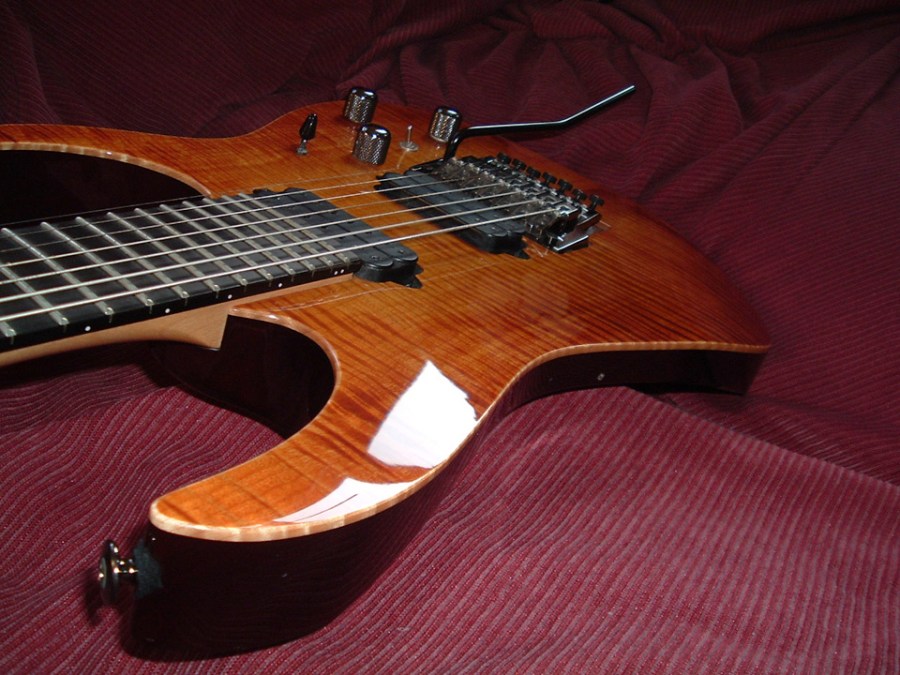
I actually forgot I still had pictures of this one, but while transferring pictures from my old recording computer to my new one this January, I stumbled across a “CST” folder. I won’t lie, most of these aren’t great pictures, and even the newest are 20 years old; technology wasn’t as good, I was a worse photographer than I am today (and I’m still not a good one), and anything you ever wanted to put up on the internet, that dictated a small file size.
Still, this was something of a “white whale” guitar in Ibanez circles, and I thought they were worth re-sharing.
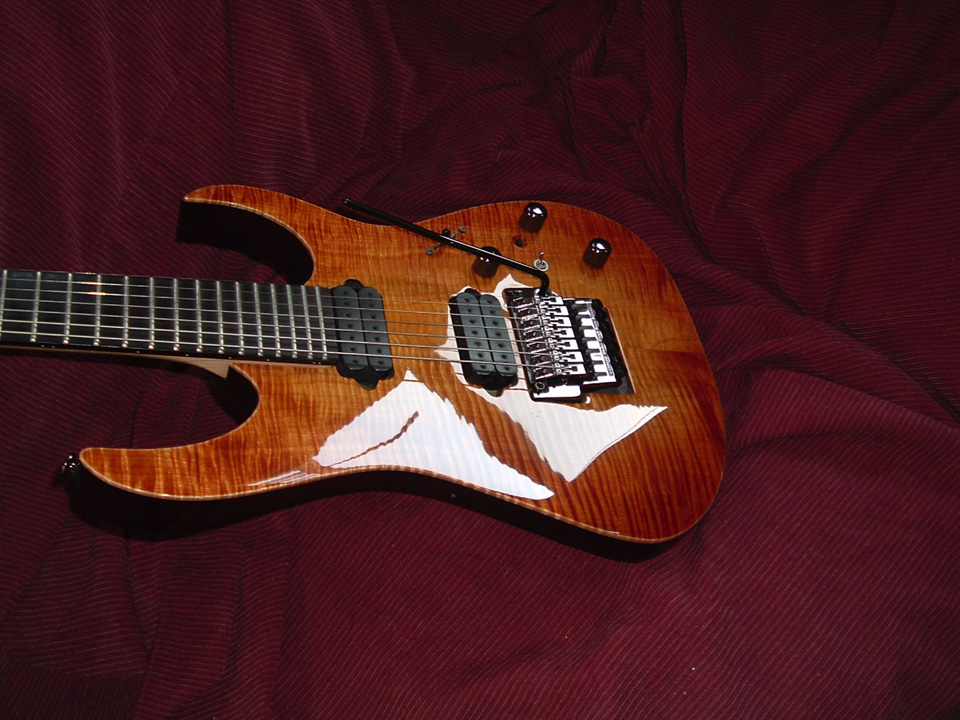
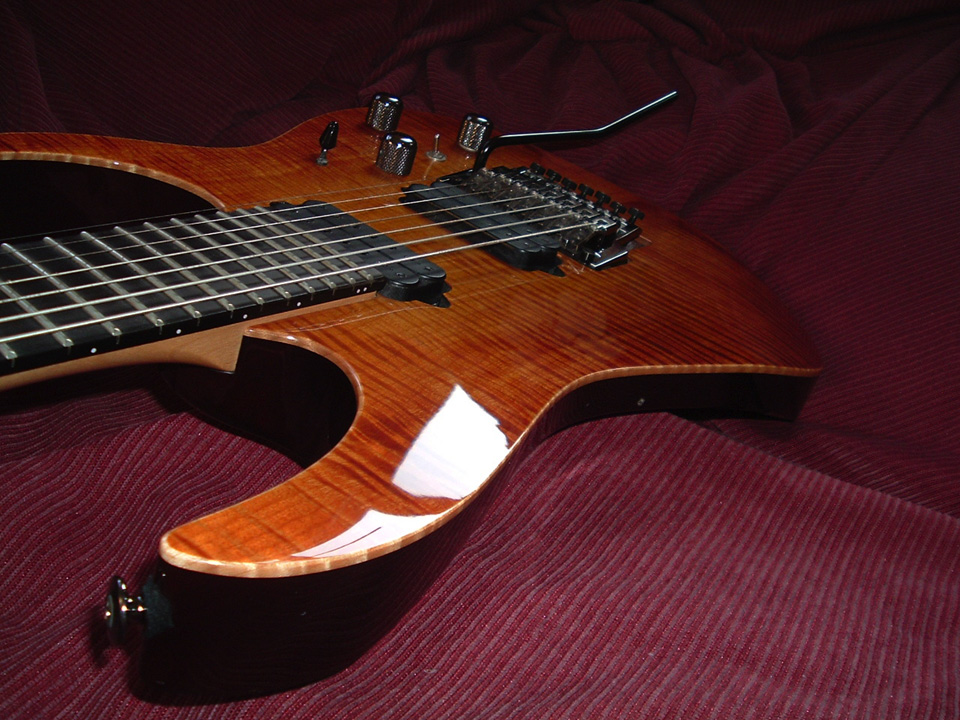
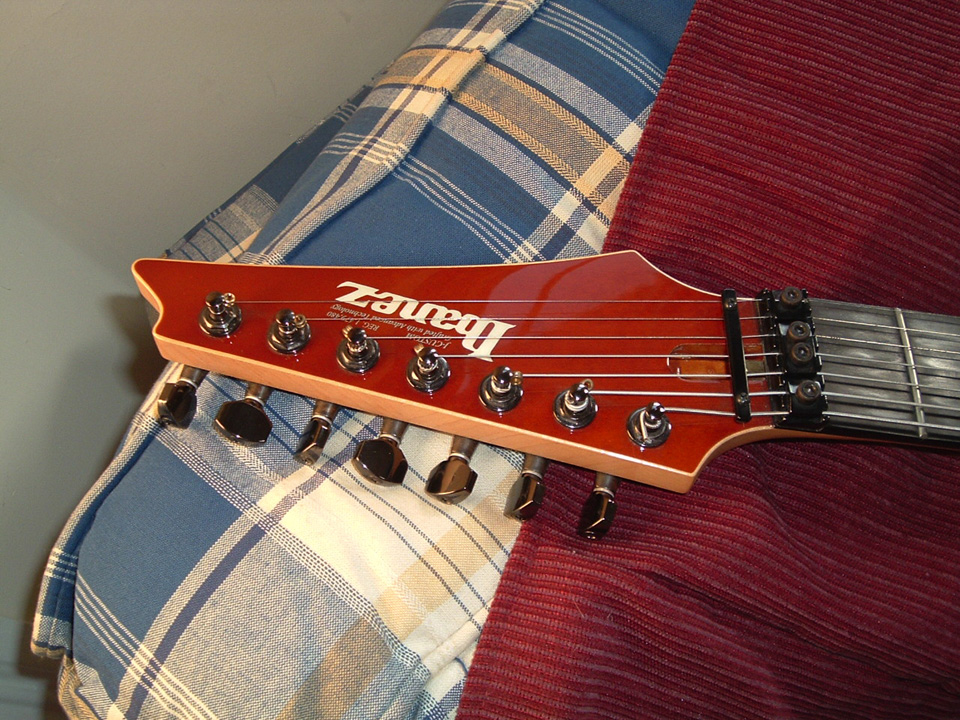
…and then two even older ones, with an even worse camera:
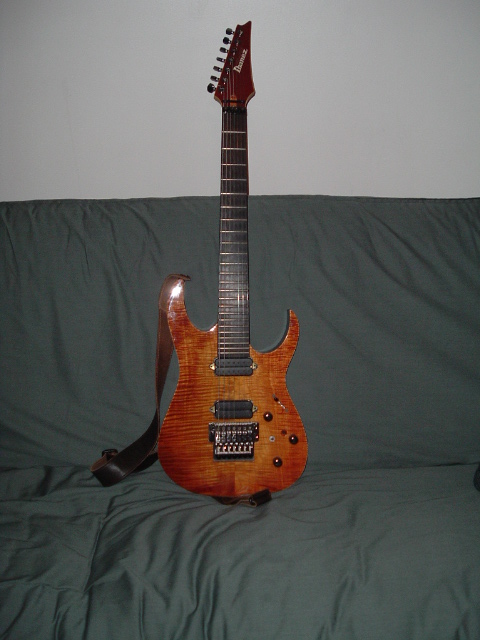
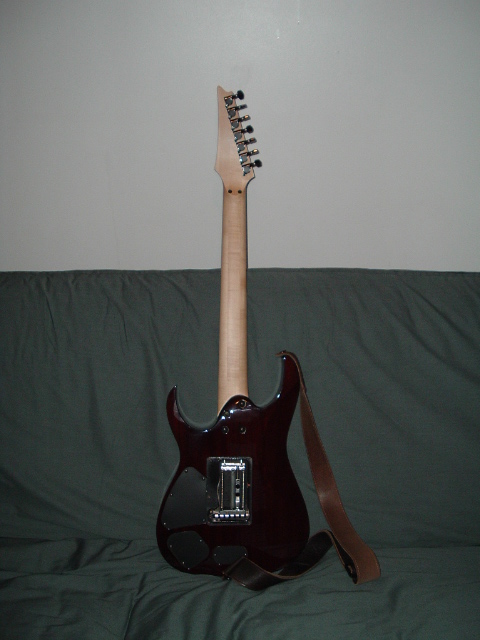
This was an early J-Custom, Ibanez’s Japanese small run production line; mahogany body. flamed maple top, ebony fretboard, “vintage violin” finish which didn’t actually inspire the choice of Bengal Burst on my Suhr but probably didn’t hurt, custom-wound Dimarzio pickups, and an Ibanez “Double Edge” seven string trem, with piezo pickups under the saddles. Normally the piezos and the magnetic pickups had seperate outputs, but while my memory is a little fuzzy, this one almost certainly had the KJG wiring mod to allow you to blend both, by virtue of the fact the seller was a friend of Kevan’s and he helped broker the deal.
It was also a “white whale” guitar because they were produced in insanely limited numbers; the J-Custom shop typically worked in batches of 12 serial numbers, and based on those serials there appears to have been one full run of 12, and part of a second; a reasonable guess was there were 18 of these produced. They were made in 1999.
At the time I bought this guitar, I was not long out of college, working my first “real” job, and this was a huge splurge ad I ate ramen for some time afterwards, but there’s no question this is one of the prettiest seven string guitars on the market at the time. I felt very lucky to own one of them at the time, and looking back I still do.
The Downsides of Owning a Collectable Guitar
There were a few things I didn’t like about owning this CST, though. Right off the bat, CSTs were very rare and very in-demand guitars. I remember posting a thread on a guitar forum after buying it with a few pictures, and immediately getting a private message from another member, “Nice guitar. How much do you want for it?” When I said it wasn’t for sale, I got the immediate followup “everything has a price.” I ignored it. The same guy would periodically send mwe offers, and then several years later when I DID post it for sale, he posted in the thread telling me my asking price was too high and offering quite a bit less; my asking price was 30% or so below the offer he’d made me a few months before, at this point I was just really sick of him and didn’t want it to go to a collector (ultimately I did get it into the hands of someone who would play it; at least, he sent me one of his CDs with the check for the guitar so I can attest the guy DID play, rather well).
The other major issue was, I found myself kind of afraid of the guitar. Knowing it was one of maybe 18, I was afraid to scrach it or ding the finish, I was afraid to change the pickups, I was afraid to let any corrosion at all form on the bridge… and I think that came across in my playing, that the guitar just made me a little nervous. It felt like I was holding a little bit of history, and I couldn’t let anything happen to it for the sake of everyone else in the world. Eventually I realized I was mostly playing my (very player condition) PWH over the CST. Since that one was already beat to hell I didn’t worry about it so much, so it got almost all my playtime.
Going back and checking dates on old guitar forums, I actually ended up not owning this guitar for all that long, it appears – I bought it in June 2005, and sold it February 2006. I’d have thought it was two or three years, but I guess it was less than one – it felt a lot longer than that, somehow.
A Conspiracy Theory on the Pickups
There was a LOT of confusion about what Dimarzios were coming in Ibanez at the time; the Universe of course had Steve Vai’s Blaze signature pickups, but RG7620s and 7621s also had Dimarzios wound for Ibanez, as did the RG7CT and then somewhat more widely produced RG7 with broadly similar specs that followed. The 7620’s US spec sheet listed a “Blaze II” so there was some speculation that maybe they had actual Blazes in them, that just wouldn’t die. Today that pickup is known as a Dimarzio “New 7,” is well understood to NOT be a Blaze, is reportedly based on a Super 2 neck and Super Distortion bridge, and isn’t especially well loved, althouhg I remember the first time I played a 7620 not knowing it had Dimarzios and being surprised how much better the stock pickups were than what I was used to from Ibanez, so who knows.
Anyway, for a long time now I’ve wondered if maybe the New 7s were actually the pickups originally wound for the CST. It’s hard to imagine Ibanez special-ordering 18 custom pickups for a small run and doing nothing else with them, it would make sense that maybe something that was wound to sound its best in mahogany might not be a great fit in basswood, which would explain why they were less well liked (the consensus amongst people who’d played a CST was they sounded pretty good – this was twenty years ago so my memories are hazy but I remember the bridge in particular being bright with a lot of cut to it), and, crucially, a few folks who’d spoken with Dimarzio about these pickups reported back that they were ALSO based on a Super 2 and Super Distortion (at the time I don’t think it was well known what the New 7s were base on, possibly because no one really cared and they were frequently ripped out and replaced with an Air Norton 7 and Tone Zone 7 – I did, as well). The New 7s had base plates without a typical Dimarzio part number, but were stamped “N2” and “B2,” by way of identification. I never took mine out of the guitar (I was too afraid of hurting it), but I was VERY curious what the underside of the CST pickups said.
Eventually, I did track down two guys who’d owned a CST and replaced their pickups. Both confirmed, sure enough, N2/B2. One of them however had a pretty good collection of CTs as well and noted that those were stamped B1/N1, and pointed out that I likely had the dates backwards; the 7620 entered production in 1997, the CST in 1999. So, most likely, the CST shipped with the same pickups as the 7620.
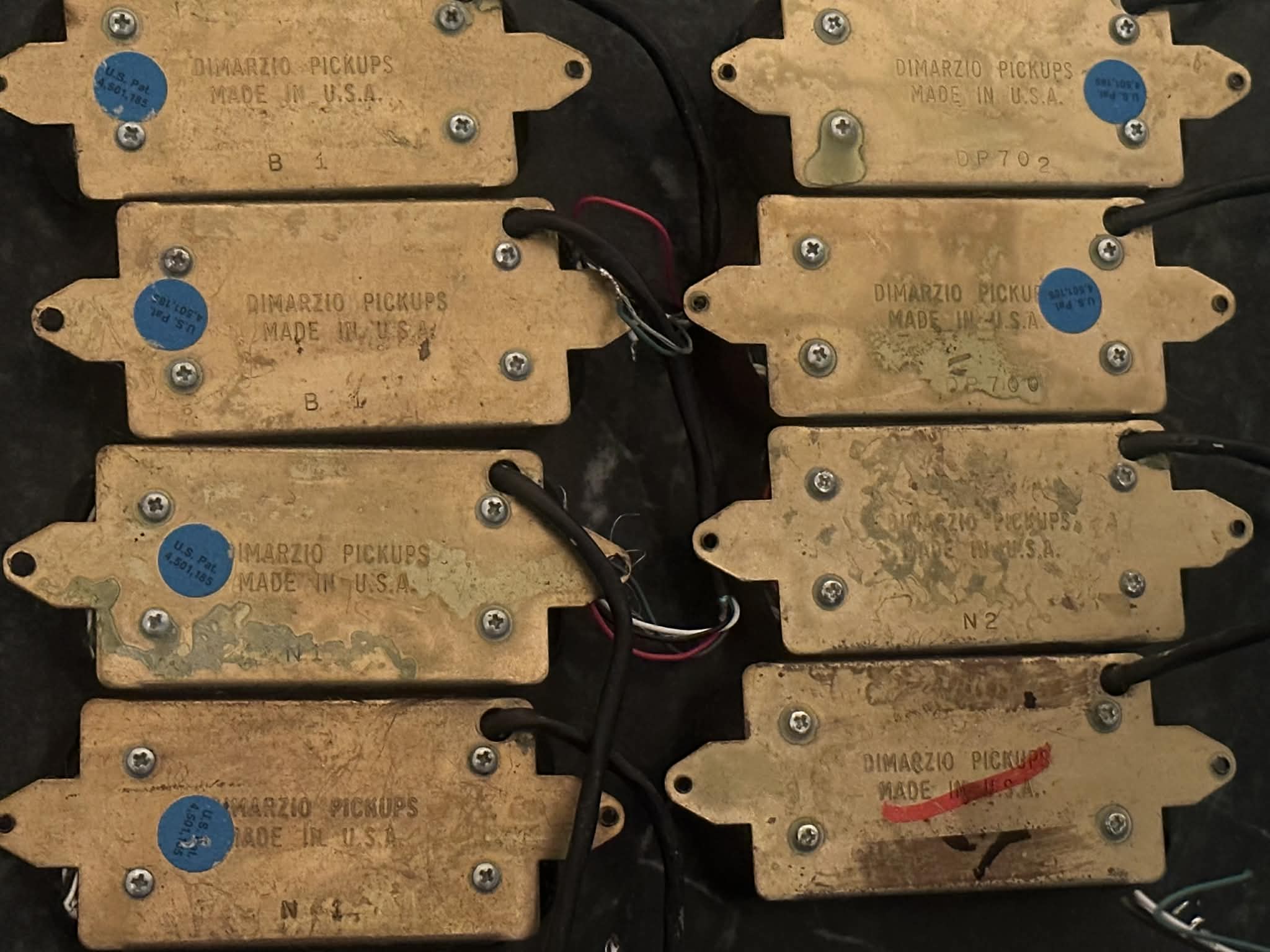
I say most likely because, well, these were small run guitars in the late 1990s, and there’s at least one other part number out there, so god only knows. Did the B1 and B2 versions get used interchangeably and did some CSTs ship with one and some the other? Are the B1 and B2 versions even different pickups And, for that matter, I haven’t exhaustively checked 7620s and a lot of them no longer have stock pickups, did THEY ship with both B1 an B2 pickups?
In any event, I’m pretty sure the same Dimarzios were used in both the 7620 and the CST, though I’m a fair bit less sure what was in the CTs.
 Drew Peterson