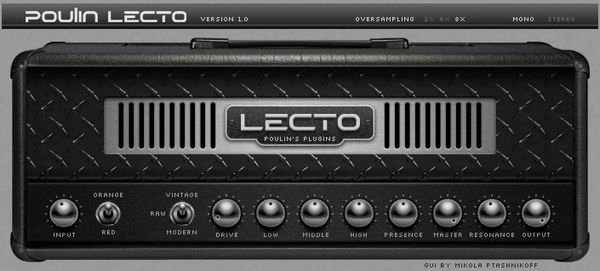
My current computer is a 2011 iMac I bought in 2012 while trying to finish up Zero Mantra before my aging PC died, an experience that after a few Blue Screens of Death has made me habitually keep any project I’m in the middle of on a thumb drive, just in case, to this day. That PC held together long enough to finish the album, if only just. I switched to a Mac with the new machine, and, well… I’m now retiring a computer built fourteen years ago, that replaced a PC that was probably six years old at the time of its death. I imagine PCs have gotten a little more robust in the intervening years, as well, but I want to take a moment and recognize that my iMac was an absolute workhorse and had a useful life longer than I had any right to hope to expect.
Anyway, by the end I was having to be careful about muting any track I didn’t need while tracking (I have Reaper set to not load FX in muted tracks) because towards the end of each project there were just too many instances of LePou Lecto running to play back without stuttering. I couldn’t play other audio without stutters either if Reaper was open, and finally my frustration got the better of me. I now own a Mac Studio M4.
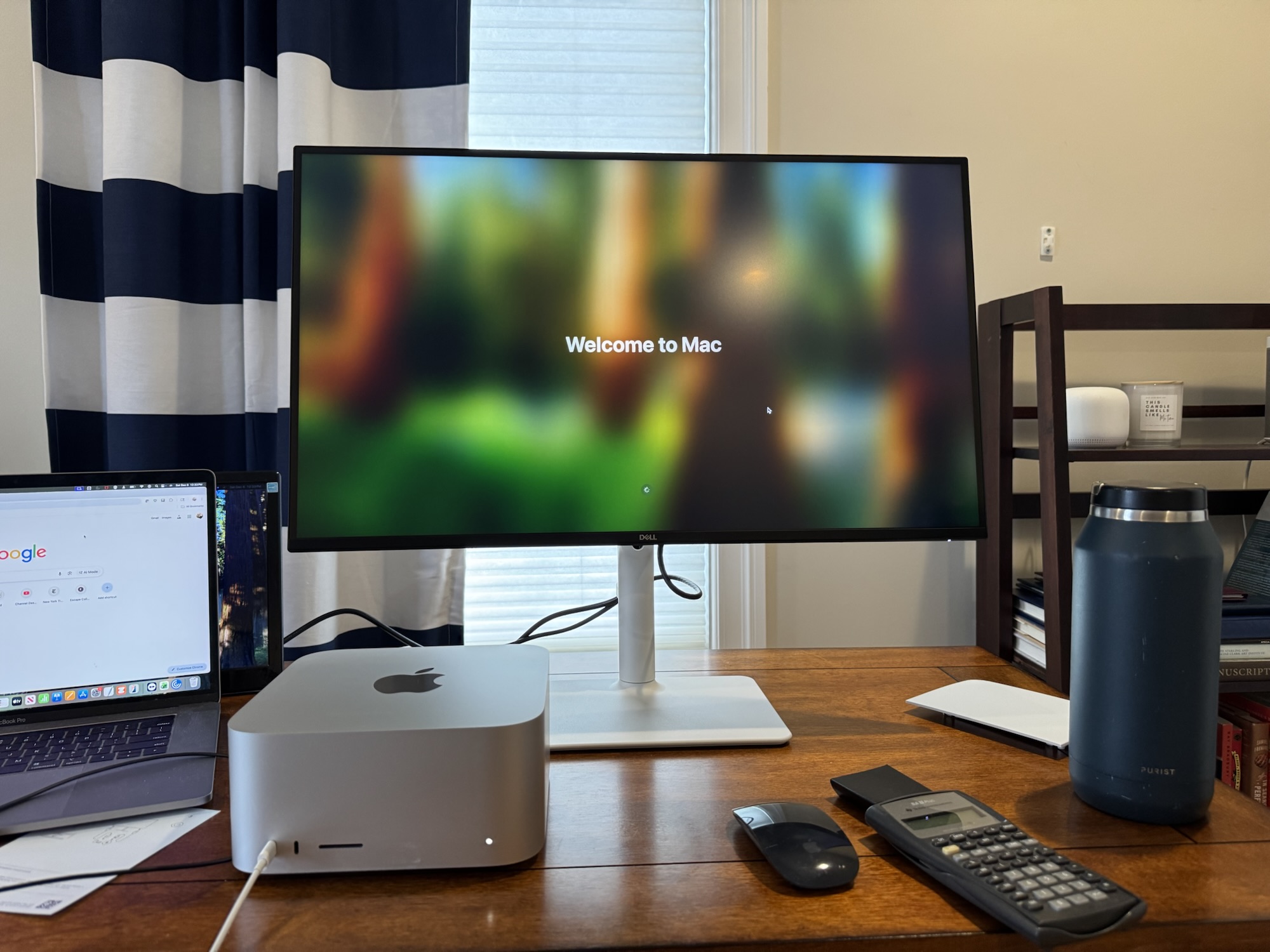
I’m very happy with it, and for the most part setup and configuration has gone smoothly. I needed some help from Apogee support to get it to talk with my Ensemble Thunderbolt, but they were rockstars (this is the second time I needed customer support, with the first resulting in my Ensemble going back to the factory for servicing and they ended up replacing the LCD while they had it as well, just because – they’ve been amazing to work with, and there’s a bunch of other great options at their price points too, I recognize, but I’ve been very impressed with their customer service and my next interface will likely be from them, as well).
I did, however, as one should expect with a 15 year old dinosaur, have a few plugins that were no longer compatible with current MacOS, that I had to replace. I’d still used a few Waves compressors and tape sims, but I took advantage of Universal Audio’s holiday bundle sale to grab a whole bunch of both and should be well squared away now.
But the one I’m actually a little sad about is, to little real surprise since it’s 15+ year old freeware, I had to retire my LePou amp sims. I’d only downloaded them ages ago because a buddy had asked me to give him a few blues-rock DI tracks for demo work while getting a reamping business off the ground and I wanted to at least make sure what I was sending him was decent. Then, several years ago, I started trying using them while writing, so I could seamlessly punch in as ideas evolved. As it turned out it was a pretty game-changing writing process for me. And, Lecto might not have been perfect, but I could absolutely get it into the right ballpart for the sort of sounds I was getting out of first my Roadster and now my Mark V.
I liked it for two main reasons – one, because it really did sound remarkably good, and got into the right ballpark of “smooth saturation” I like from a Mesa, and too, it didn’t sound SO good that I overthought it or ever seriously considered using it in place of my amp. But it was a great tool.
Holiday sales being what they are, after looking at a few other options, I ultimately grabbed IK Multimedia’s Amplitube 5 Max that was heavily on sale for $99, and included authorized models of a Dual Recto and, notably for me, a Mark V.
First impressions are it’s very good. There was some high frequency harshness I never really dialed out of Lecto that’s just gone here, and with a few caveats when I tried to visually match amp settings onscreen, the models pretty much did what I expected. I’ve always said that especially in the early days of modeling one of my problems was you have these Swiss Army Knife amps that can doo all of these amazing different things, and then you pull up a model and it’s pretty much just going to do the “signature” sound of that amp. Rectos may be known for their crushing high gain sounds, but they do pretty good vocal lead sounds too and – while Mesa’s gone and made it quite a bit better in the last decade – even back in the day I always liked the Recto clean. Here, that’s not a problem – I actually really like the “Edge” mode of Ch 2 on the Mark V, especially with a Strat, and I imagine this is pretty much the only VST that’s attempted to model that, much less done such a good job. It’s funny, when I first downloaded the demo onto my iMac so I could better A/B it with what I was used to, initially I hated the Mark-V. It was thin, bright, and kinda fizzy. It was only after a few minutes of messing with it that I realized it had swapped me from a Recto 4×12 to a Road King 2×12 (which I assume is, like the 4×12, half open backed) when I loaded it. Swap cabs, and I felt immediately at home.
And that itself is probaby worth a note – I’d been thinking about maybe trying to get a second cab, and probably a Marshall, just for a little more diversiry. Messing with this, it turns out I don’t like too many of the cabs other than the V30-loaded Recto. I doubt that’s because they’re badly done, so much as I just really like the sound of Recto cabs with V30s.
I have a few minor caveats though. First, Amplitube seems to be designed to take hotter signals than a DI tracked at unity, which is a minor nuisance; it looks like the input trim at +6.0db gets me right up to about what I’d expect, and since I don’t really plan on doing much with the rest of the presets here, I’ve just been creating my own and saving them all with the appropriate input trim adjustment.
Second, while on one hand I really value the fact they model a whole library of mics and I had no problem replicating my own setup, a SM57 and MD421 on a Recto 4×12 with V30s… on the other, I ended up spending a couple hours last night making minute adjustments to mic position, saving the reset down, then going through all my projects and re-loading the new modified preset, and then repeating over and over again… And, one of the other reasons I’ve always preferred real amps is they force you to commit to a tone up front, and you can’t waste hours going back and forth between subtle changes after you’re done. I can’t promise I’ll stick to this, but I hit a point last night where I decided I was going to drive myself mad if I kept this going, so I just saved my presets and moved oon. I’ll try not to touch them again while I finish tracking.
Anyway, I haven’t done truly scientific A/B testing or anything, but I have clips of a soong of mine with the Lecto model on it, so I made matching clips with both Amplitube’s Mark V, and reamped and recorded through my own Mark V with very similar amp settings. The mic positions almost certainly aren’t exact here either, and my live amp recording is probably a hair closer to the dust cap than I’m going to want it to be, but it’s good enough for an example. There’s more delay on the LePou, but the real Mark V, I just copied over the Valhalla instance from the Amplitube track, so those two are identical.
LePou Lecto:
Amplitube Mark V:
Real Mark V:
I think this is kind of fun. The Amplitube model really IS good. But, I think the Mark V, even with a rushed mic job, is just that much better. When I first started messing with it I was worried maybe it WAS good enough that I might be tempted to use Amplitube instead of micing my own amp, and I’m now confident that I want to use the real thing.
Oddly, layering the two is probably out of the picture because I got some pronounced phase cancellation issues when I played them both back at once, which I don’t recall ever having happen with Lecto. So maybe that’s a good sign?
 Drew Peterson