Much earlier along in this process, I wrote a longer post about the acoustic tracking process and how this album will differ from how I approached guitars for “Zero Mantra.” Mostly, this was a change from stereo to mono recording:
Over time, I gradually had a change of heart here. Stereo acoustic recordings make a lot of sense when you’re recording a single performance and you want to make as big as possible. Solo acoustic guitar, or acoustic singer songwriter with minimal accompaniment; you probably have one performance but you need both size and stereo spread. In a rock context, though, your problem is exactly the opposite – you want stereo spread, but you’re going to have to fit your guitar in around a lot of other stuff, and space is a priority since everything else is fighting for it. At some point, I just started using one mic at a time and double-tracking instead, and never really looked back.
I didn’t give it ton of thought as to why, though, beyond two mono performances were something to me that sounded better than one stereo.
The other day though, I stumbled across a comment in a recording discussion forum that I found myself thinking about later that night. An engineer with extensive experience in live sound and recording mentioned almost in passing that he doesn’t really bother with stereo approaches on an acoustic because…
“… if you want realism, the biggest a guitar ever is, is the size of a guitar width wise. 600mm or 2 feet ish? if you make it wider, that’s not real and sounds to me just plain weird. So while I may have two mics, they’ll be panned quite narrow.”
…and it hit me, that’s exactly why I found myself gravitating away from “stereo” acoustic guitars. Because, as a guy who couldn’t tell you how many hours he’s spent with an acoustic guitar on his lap, they just don’t sound “wide.” I think I was sort of flirting with this idea in my earlier post even if I hadn’t figured out quite how to articulate it, but in a solo performance type recording, you have a mono instrument and you as an engineer need to create space around it because listeners except space, but it needs to be space around that instrument rather than space in that instrument, because a guitar is not a “wide” sounding instrument. Trying to turn it into one makes it sound like, in the words of Bilbo Baggins, it’s being “thin, sort of stretched, like butter scraped over too much bread.”
I think oftentimes in recording its easiest to do a deep dive on the technical questions, the “How’s” of recording, and really focus in on methodology. And certainly when I was first learning all of this stuff, I took a really technical mindset and looked at it as an engineering problem to solve. But, maybe twenty years down the road, if I think back to a lot of the biggest breakthroughs I’ve made, it seems like most have been philosophical, or the “Why’s” of recording. Maybe the biggest, which I’ll save for the subject of a future post, is how much of a good mix is just figuring out your arrangement in terms of supporting what makes the song work, but I think this is a pretty important one too; think about the integrity of your source, and how you experience its sound, and tailor your approach to getting the most out of what you value about that experience.
Nothing about the recording process requires that you document things exactly as they are in the world; in some ways even the decision to multitrack guitars is a break from a “natural” experience of a guitar (to say nothing of mic selection to bring out certain sounds, EQ, compression, reverb, etc…) but I suppose having two mono tracks is more akin to having two players in a room playing together and generating space from discrete performances. Recording isn’t being a documentarian, and there’s a lot of illusion and artifice that goes into making a great sounding record. But I do think as a guitarist who cares about the experience of hearing a guitar, it does make a lot more sense to treat it as a discrete instrument coming from a discrete point in the stereo spectrum, rather than trying to spread it across the audio field.
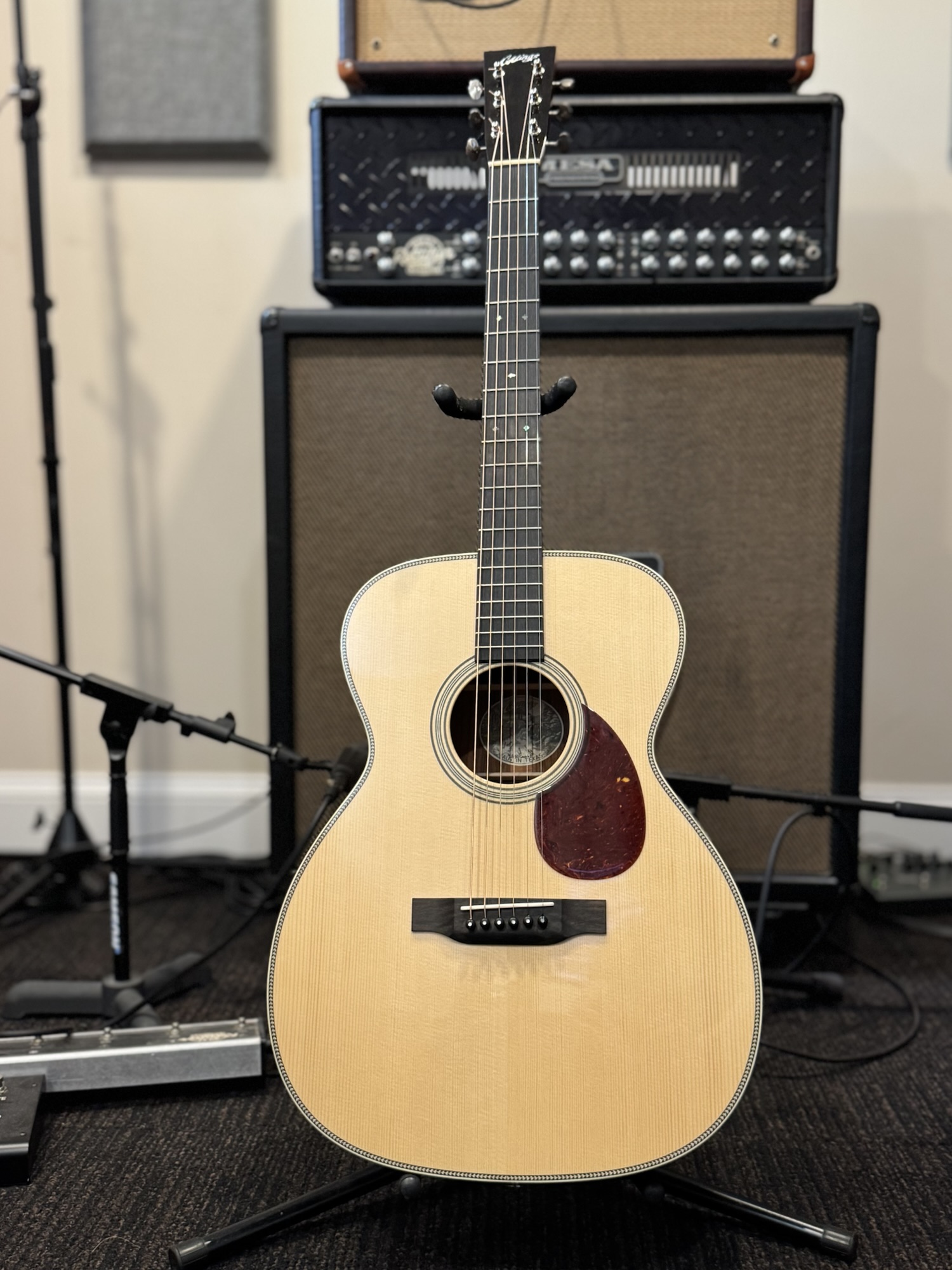
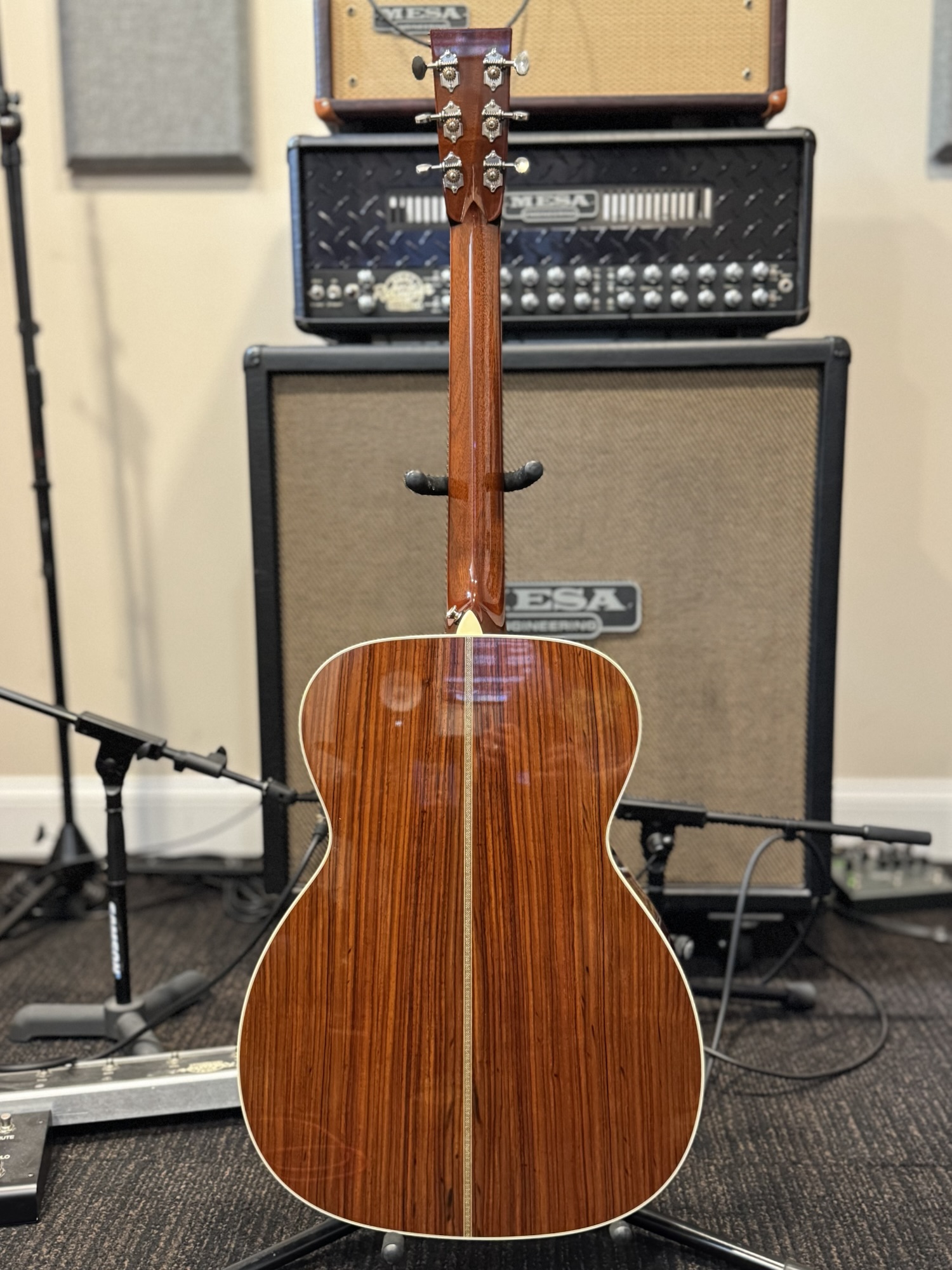
Anyway, a few weeks back I bought a gorgeous used Collings OM2H up at the Music Emporium in Lexington, and in part to just squeeze it in somewhere on this album, and in part because the transition from the last song I recorded, to the second to last song I recorded that follows immediately after it, sounded a little too abrupt, I added an acoustic intro:
Acoustic ballad to heavy riff rock just felt like it needed some sort of bridge, so here’s something a little bluesier to glue the two together. I’m still kind of figuring out this guitar (recording it, in any event – it plays amazingly) and it’s kind of interesting that it seems my usual approaches for my Martin MC16 sound great there but just may not be the right answer here, so I’ve got some experimentation ahead of me. It’ll be a lot of fun, though. Gorgeous guitar:
Meanwhile, drum programming is very nearly done, and I’m hoping to take a couple days off for reamping in the net few weeks.
 Drew Peterson